Four rounds of poulticing. That's what it took before the chloride readings on a thirteenth-century limestone capital finally dropped below the threshold where I was willing to walk away. Twelve days of paste, plastic sheeting, and one very nervous conservation officer. The stone looked worse for two of those days than when we started. Then it dried, and the salts were gone.
Salt removal is the least glamorous part of stone conservation and the one that ruins the most projects when it's rushed. You can clean a façade to a perfect honey tone and watch it blister again within eighteen months because you never addressed what was inside the pore structure. Poulticing is how you get at that. It's also how a lot of well-meaning people damage irreplaceable fabric with tap water and good intentions.
Key Takeaways
- A poultice is a sacrificial material that holds water against the stone and pulls dissolved salts out by capillary suction as it dries — the salt goes into the paste, not into the room.
- Poulticing removes salts from the stone; it does not remove the source of the salts. If groundwater or a cement repair keeps feeding chlorides in, you are bailing a boat with a hole in it.
- Pose time runs from a few hours for a light surface desalination to several days for deep contamination, and it depends far more on drying conditions than on the clock.
- Never use tap water on salt-loaded stone without checking it. Hard water adds calcium, and the wrong water can deposit new salts while removing old ones.
- Measure before, during and after. Conductivity of the extraction water and simple nitrate/chloride test strips will tell you far more than your eyes will.
- Plan on multiple cycles. One application is a gesture, not a treatment.
What a stone poultice actually does (and why the word is borrowed from medicine)
The term came from medicine, where a poultice was a moist mass of herbs or clay pressed against the skin. Conservators borrowed both the word and the mechanism. You mix a fine-grained material with a liquid, spread it on the surface, and let it dry. As water evaporates from the paste, capillary suction draws more liquid up from the stone's pore network — and dissolved salts travel with it.
Where the salt ends up is the whole point. It crystallises inside the poultice, which you then lift off and dispose of. A washing or a steam clean pushes salts around and dries them back onto the surface as efflorescence. A poultice takes them away in a truck.
How does a poultice work?
Three things have to be true at once. First, the poultice material must have a finer pore structure than the stone, so the suction gradient points outward rather than inward. Second, the stone must be wet enough that salts are actually in solution — dry salt doesn't migrate. Third, drying has to happen slowly and from the outside in, so the evaporation front stays at the poultice surface and not inside your limestone.
Get the third one wrong and you cause the exact damage you were trying to prevent. I watched a team wrap a poultice in polythene with the edges sealed and leave it for a fortnight in direct August sun. The paste never dried. When they pulled it off, the salt had simply redistributed deeper into the wall, and a fresh bloom of efflorescence appeared three weeks later about half a metre higher up. Total waste of two weeks and a lot of expensive kaolin.
The other distinction worth holding onto: a strict poultice is water and an inert medium, nothing else. The word gets stretched to cover any paste-based extraction — chelating poultices for rust staining, solvent poultices for oils — but for salts, you want the plain version. Adding surfactants or acids to a desalination poultice is how you introduce ions you'll spend the next cycle removing.
Reading the stone before you mix anything
Not every salt problem wants a poultice. Some want a different answer entirely, and diagnosing which is which will save you weeks.
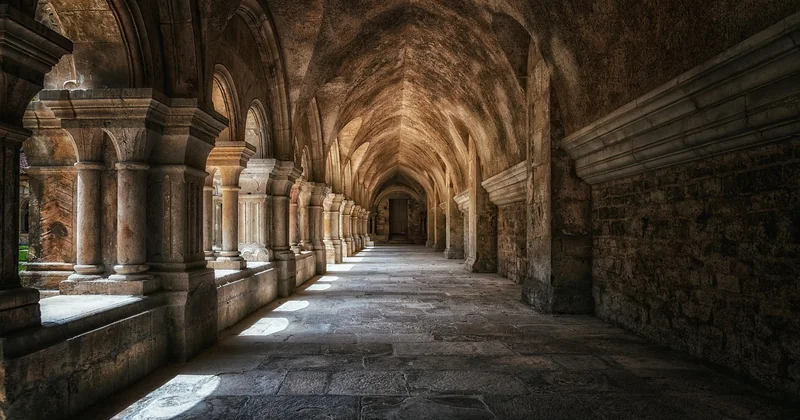
Start with where the salt sits. Efflorescence — the fluffy white bloom on the face — is a symptom of salt migrating to the surface and drying there. It wipes off. It also comes back, because the reservoir is behind it. Subflorescence is the nastier version: crystals forming just beneath the surface, pushing the stone apart from the inside. That's where you see powdering, scaling, and flakes lifting at the edges. A poultice helps with both, but with subflorescence you're treating a stone that has already lost cohesion, and you need to consolidate or replace before you load it with water.
Identifying the salt matters more than most guides admit
Chlorides, nitrates, sulfates and gypsum behave differently and respond differently. Nitrates are highly mobile and hygroscopic — they'll pull moisture out of humid air and keep the wall damp forever. Chlorides often point to groundwater, rising damp, or in coastal settings, sea spray. Sulfates frequently come from cement-based repairs or from the stone itself, and gypsum crusts on limestone are a black-crust problem as much as a salt problem.
You don't need a full laboratory analysis to make progress, but a few pounds on test strips is money well spent. Nitrate and chloride strips give you a rough concentration reading from a sample of the extraction water. If you're seeing high nitrates, look for a source — a leaking drain, animal waste in a cavity, a former agricultural use. If it's chlorides at a coastal site, you may be fighting an ongoing supply and should plan a maintenance regime rather than a one-off cure.
Porosity decides your medium. A tight, polished marble sheds water and needs a gentler, longer contact with a fine clay. A porous sandstone or brick will drink a wet paste dry in hours and may need a thicker application or a repeat the next day. More on that below.
Choosing your medium: clay, paper pulp, or something else
This is where most of the practical decisions live, and where the reference literature tends to go quiet. Here's how the main options compare in field use.

| Medium | Best for | Watch out for | Typical mix |
|---|---|---|---|
| Kaolin (white china clay) | Dense limestones, marble, polished surfaces; low residue risk | Slow drying, can be crumbly when thick | Powder to water, roughly 2:1 by volume, until it holds a soft peak |
| Attapulgite / sepiolite | Highly porous stone, quick extraction | Higher suction can pull fines out of friable stone | Similar ratio, slightly wetter |
| Cellulose pulp (paper) | Delicate or intricately carved surfaces; easy to lift cleanly | Dries fast, needs more frequent rewetting or covering | Soaked pulp squeezed to a damp mass, applied 1–2 cm thick |
| Cotton wool / lint | Small areas, sample tests, vertical faces | Fibres snag on rough stone; poor for deep extraction | Dampened and pressed, backed with cling film |
| Bentonite | Cheap bulk applications on flat masonry | Can leave iron staining on pale stone; swells unpredictably | Thicker paste, test first |
My default for historic limestone and marble is kaolin. It's inert, it lifts cleanly, it leaves almost no residue, and it doesn't stain. I use paper pulp when I'm working around carving or mouldings where getting clay out of a crevice would be a nightmare. Attapulgite I reserve for genuinely porous substrates where I need more pull and I've already confirmed the stone isn't friable.
Whatever you pick, test it on an inconspicuous patch first. I mean a real test — same stone, same conditions, same paste, left for the full intended duration. I once skipped this step on a magnesium limestone and got a pale halo where the kaolin had drawn calcium out of the surface. It faded after a couple of seasons, but it was visible for a year and I had to explain it to a very patient client.
How long do you leave a poultice on?
Between four hours and about five days, and the honest answer is that the clock matters less than the drying curve. A poultice left on until it's bone dry has done its work. One that's still damp is still extracting.

A rough schedule by situation
- Light surface desalination on a small area: 4–8 hours, one cycle, check and repeat if strips still read high.
- Moderate contamination in dense stone: 24–48 hours with a breathable cover to slow drying.
- Deep contamination or thick masonry: 3–5 days, and you may need to change the paste partway through as it loads up.
- Vertical faces: shorter contact, thicker paste, and a support layer of tissue or cling film that's breathable at the edges — never sealed all round.
The single biggest mistake is sealing the poultice so it can't dry. If it can't dry, it can't extract. The second biggest is leaving it on so long in cold, damp weather that the stone stays saturated for a week, which invites biological growth and, on a wall with any residual salts, drives them deeper.
Ambient conditions matter more than any number on a calendar. Warm, moderately humid, gently moving air is ideal. Cold and wet slows everything to a crawl; hot and dry with direct sun will skin the paste over and trap moisture under the crust. I plan poultice work for late spring and early autumn, and I check the forecast before I mix anything.
How to make a poultice to clean marble
Marble is unforgiving. It's dense, it polishes, and it shows every residue. Here's a procedure that has worked for me on statuary and interior cladding.
- Pre-wet the surface. Mist the marble with deionised or distilled water and let it sit for twenty minutes. Dry stone wicks water out of your paste too fast and you lose control of the gradient.
- Mix kaolin to a soft-peak consistency with deionised water. Roughly two parts powder to one part water by volume, adjusted until it just holds a shape on a spatula.
- Apply 5–10 mm thick with a soft brush or gloved fingers, working it into the pores without scrubbing.
- Cover with a breathable layer — damp tissue, or cling film with the edges left open. On a horizontal surface, leave it largely uncovered and just monitor.
- Leave until the paste is dry to the touch at the centre, typically 24 hours indoors, longer in cool conditions.
- Lift with a plastic scraper and soft brushes, then rinse with deionised water and a natural bristle brush. No metal tools. Ever.
- Let the marble dry fully — a week is not excessive — before judging the result or starting another cycle.
Skip the temptation to add anything clever. No bleach, no detergent, no "cleaner" that promises to lift stains faster. Marble is calcium carbonate; anything acidic eats it, and anything with surfactants leaves a residue in the pores that shows up as a dull patch under grazing light.
Measuring whether it actually worked
You cannot judge desalination by looking. The stone will look better after a poultice whether or not you've removed meaningful salt, because you've also removed surface dirt and the visible bloom.
Here's what I do. I collect the poultice residue and the rinse water and check its conductivity with a cheap handheld meter. A high reading means salt came out. A reading close to the baseline of the water I put in means the cycle is exhausted. I run nitrate and chloride strips on the same samples. And I photograph the same spot under the same lighting at a fixed distance, every cycle — the comparison over four cycles is genuinely informative in a way that a single before-and-after is not.
Stop when the readings plateau across two consecutive cycles. That's your practical endpoint. There's always a residual fraction of salt locked deep in the stone that no poultice will reach, and chasing it indefinitely damages the surface you're trying to save.
What this doesn't fix
Poulticing is a treatment, not a cure. If the wall is sitting on a rising damp problem, if a cement render is trapping moisture, if a leaking gutter has been soaking a cornice for a decade, you will poultice forever and lose ground each time. Fix the water first. Then treat the salt.
And keep expectations honest. A well-run poulticing campaign will drop salt concentrations substantially over several cycles and buy the stone decades. It won't return a heavily contaminated thirteenth-century capital to the condition it was in when it was carved. Nothing will.
The thing that stays with me from that four-round job isn't the readings. It's the moment on day nine, when the conservation officer leaned in and asked whether we'd made it worse. We had, temporarily. That's the part of this work nobody photographs — the stretch where the right process looks like the wrong one, and you keep going because you measured, you recorded, and you know the mechanism is sound.